Primary tabs
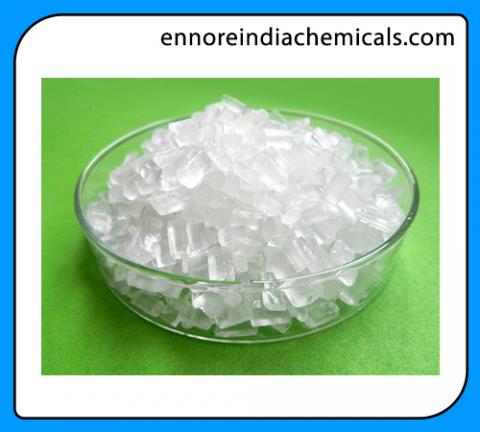
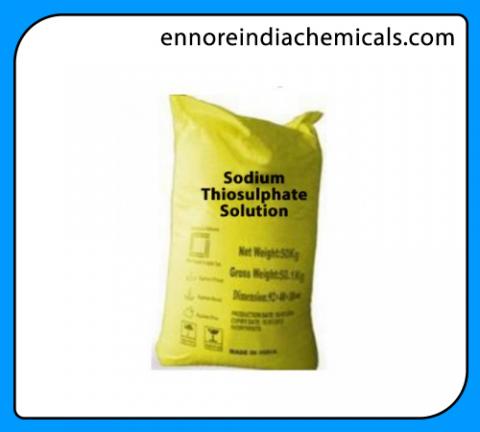
Sodium Thiosulfate Pentahydrate
SKU::RXSOL-19-2031-050
Sodium Thiosulfate commonly used in Dechlorination of municipal wastewater, pulp & paper, power, and textile water treatment plants and as an Oxygen scavenger in oil well drilling process in Mining industries. Also chemically suitable for Aluminium cation reaction.
Sodium Thiosulfate used as a Pond / Aquarium Dechlorinator. But Sodium Thiosulfate does not treat for Chloramine, only Chlorine. Chloramine is a chemical compound composed of chlorine and ammonia and more and more utilities are converting to its use. Check with your municipal water company to learn which chemical they are using. If Chloramine is the disinfectant, please research other knowledgeable sources to learn your best solution for water treatment.
Molecular Formula ::: Na2S2O3 - 5H2O
This product also used as a Photography as a fixing agent (hypo) to dissolve unchanged silver salts from exposed negatives.
Typical Applications
Sodium Thiosulfate Anhydrous can be used for:
-
Ballast water dechlorination
-
Residual chlorine neutralization
-
Electrochlorination BWMS
-
Sodium hypochlorite-treated ballast water
-
Oxidizing biocide neutralization
-
Ballast water discharge preparation
-
Marine water-treatment systems
How Sodium Thiosulfate Works
Sodium thiosulfate functions as a reducing agent. It reacts with residual oxidizing species and converts them into less oxidizing chemical species.
In a chlorine-treated ballast water system, sodium thiosulfate can consume residual chlorine, helping reduce the Total Residual Oxidant (TRO) concentration before discharge.
The required dosage depends on:
-
Initial TRO concentration
-
Ballast water volume
-
BWMS technology
-
Water chemistry
-
Required discharge residual
-
Chemical concentration
-
Reaction/contact time
-
Dosing-system configuration
Therefore, dosing should be calculated based on the actual BWMS operating parameters rather than using a universal fixed dosage.
Important Dosing Consideration
The required quantity of Sodium Thiosulfate should be determined from the actual TRO measurement and BWMS dosing requirements. Overdosing or underdosing can affect ballast-water treatment performance and discharge conditions.
For shipboard operation, dosing should therefore be controlled through the vessel's approved BWMS procedures, TRO monitoring system, and chemical-dosing equipment.
Sodium Thiosulfate for Ballast Water Neutralization
Many Ballast Water Management Systems (BWMS) use an oxidizing treatment process to control organisms in ballast water. Depending on the technology, treatment may generate or introduce free chlorine, hypochlorite, or other oxidizing residuals.
Before discharge, residual oxidant may need to be neutralized.
Sodium Thiosulfate Anhydrous can be dosed into the treated ballast water to reduce residual oxidizing compounds.
This makes it an important chemical for selected ballast-water neutralization systems.
Advantages of Anhydrous Sodium Thiosulfate
High Active Concentration
Because the anhydrous grade does not contain water of crystallization, it provides a higher chemical concentration by weight compared with hydrated grades.
Effective Dechlorination
It is widely used as a reducing agent for residual chlorine and hypochlorite neutralization.
Easy to Prepare
The solid can be dissolved in water to prepare a dosing solution suitable for compatible chemical dosing systems.
Suitable for Marine Applications
Sodium thiosulfate is used in selected marine and ballast-water treatment applications where residual oxidants must be neutralized before discharge.
Sodium Thiosulfate Anhydrous vs. Pentahydrate
Sodium thiosulfate is available in different hydration states.
Sodium Thiosulfate Anhydrous:
Na₂S₂O₃
Sodium Thiosulfate Pentahydrate:
Na₂S₂O₃·5H₂O
The two grades should not automatically be substituted on a kilogram-for-kilogram basis because their molecular weights and active chemical concentrations differ.
When changing between grades, the dosing calculation should be adjusted according to the required molar or active-chemical concentration.
Storage and Handling
Sodium Thiosulfate Anhydrous should be stored in a cool, dry and well-ventilated location in tightly closed packaging. Protect the product from moisture and contamination.
Appropriate personal protective equipment should be used during handling and preparation of dosing solutions. Always consult the latest Safety Data Sheet (SDS) and the BWMS manufacturer's operating instructions.
Conclusion
Sodium Thiosulfate Anhydrous is an important reducing chemical for selected ballast water treatment systems, particularly where chlorine or other oxidizing disinfectants are used. Its ability to neutralize residual oxidants makes it valuable for ballast water dechlorination and discharge preparation.
For marine operators requiring Sodium Thiosulfate Anhydrous for Ballast Water Treatment, a consistent-quality product, correct dosing calculation, proper storage, and compatibility with the vessel's BWMS are essential for effective and compliant operation.
Sodium Thiosulfate Anhydrous for Ballast Water Treatment
Sodium Thiosulfate Anhydrous is an effective reducing agent widely used in ballast water treatment systems to neutralize residual oxidizing disinfectants after ballast water has been treated. It is particularly useful in systems that use chlorine, sodium hypochlorite, electrochlorination, or other oxidizing biocides.
In ballast water management, residual oxidant must often be reduced before treated water is discharged. Sodium Thiosulfate provides a practical method for reducing residual chlorine and other oxidizing species, helping operators meet applicable discharge requirements when used according to the treatment system manufacturer's instructions.
What is Sodium Thiosulfate Anhydrous?
Sodium Thiosulfate Anhydrous is the water-free form of sodium thiosulfate, commonly represented by the chemical formula Na₂S₂O₃.
It is generally supplied as a white crystalline powder or granulated solid. When dissolved in water, it acts as a reducing agent and reacts with oxidizing substances such as residual chlorine.
The anhydrous grade offers a higher concentration of active chemical per unit weight compared with hydrated sodium thiosulfate grades, making it useful where concentrated treatment solutions are required.
Ballast Water Treatment Chemical Supplier
For shipowners, ship managers, BWMS operators, marine chemical distributors, and vessel-management companies, selecting a consistent-quality Sodium Thiosulfate Anhydrous supplier is important for reliable neutralization performance.
When purchasing the product, customers should verify:
-
Chemical purity
-
Anhydrous specification
-
Batch consistency
-
COA
-
SDS
-
Packaging
-
Solubility
-
Storage requirements
-
Bulk availability
-
Compatibility with the BWMS dosing system